
Tools for the questions
Experimental browser-memory testThe Next Sentence
Try one fictional passage with two named prepared proposals. Your branch stays in browser memory until reload unless you download its JSON record.
What a public total assumes
Try the offline calculator. It is educational: hypothetical totals, no donor information, no payment.
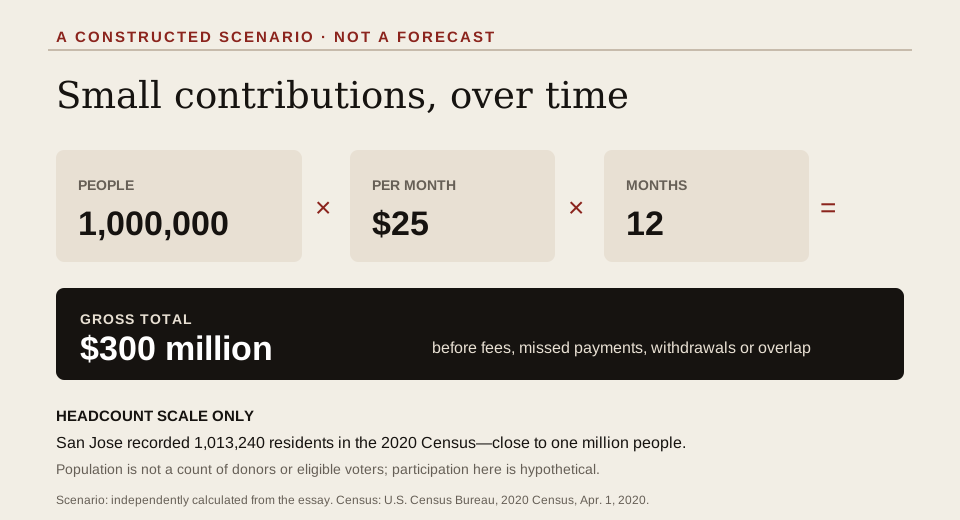
| Input | Value | Meaning |
|---|---|---|
| People | 1,000,000 | Hypothetical participants |
| Contribution | $25 per month | Per person, for twelve months |
| Duration | 12 months | One full year |
| Gross total | $300 million | Before fees, missed payments, withdrawals or overlapping contributors |
| Scale reference | 1,013,240 residents | San Jose city, 2020 Census (April 1, 2020); headcount comparison only, not donors or eligible voters |
Calculation: 1,000,000 × $25 × 12 = $300,000,000 gross. Census source: U.S. Census Bureau QuickFacts, San Jose city, California (https://www.census.gov/quickfacts/fact/table/sanjosecitycalifornia/POP645223).
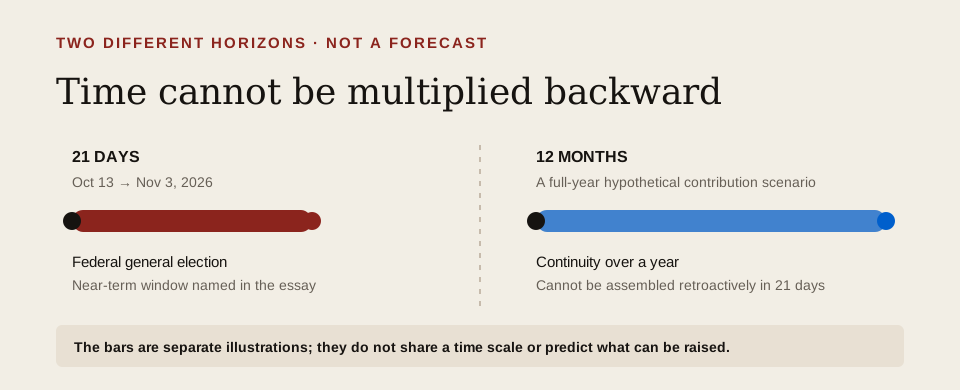
| Horizon | Dates or duration | Interpretation |
|---|---|---|
| Election interval | October 13 to November 3, 2026: 21 days | Near-term window named in the essay; federal general election date from FEC |
| Contribution scenario | 12 months | Hypothetical continuity scenario; cannot be collected retroactively inside the 21-day interval |
FEC source: Federal Election Commission, election information (https://www.fec.gov/introduction-campaign-finance/election-results-and-voting-information/). Bars in SVG are separate illustrations and do not share a time scale.
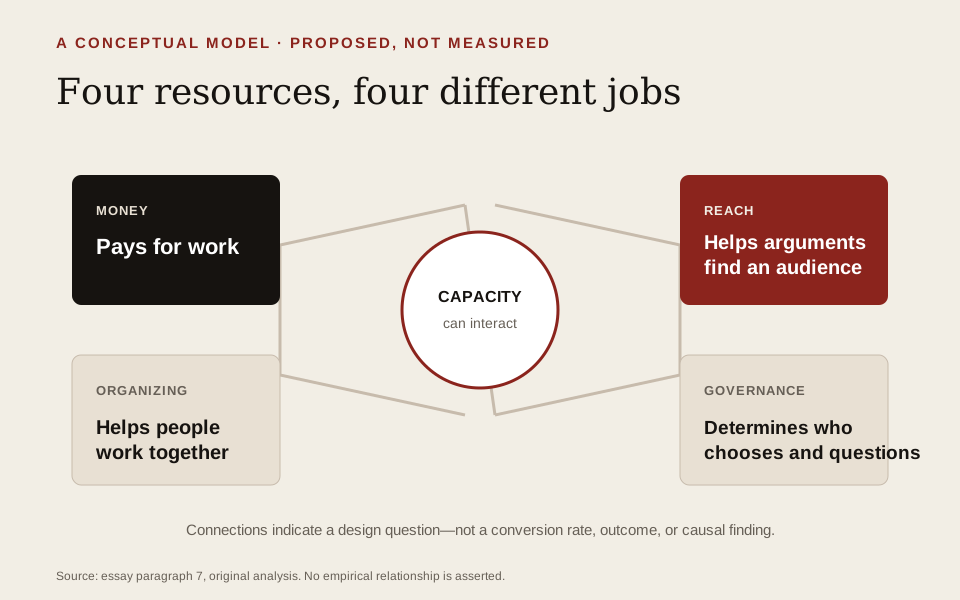
| Resource | Role in the argument |
|---|---|
| Money | Pays for work. |
| Organizing | Helps people do work together. |
| Reach | Helps an argument find an audience. |
| Governance | Determines who chooses work and who can question the choice. |
Original analysis from article paragraph 7. No conversion rates, measured outcomes, or causal effects are asserted.
Find a way to read.
A school or library can close one door. That does not erase the book—but finding another legitimate, free way to read can still demand time, eligibility, internet access and luck.